Recruitment SLA: a practical template for HR and hiring managers
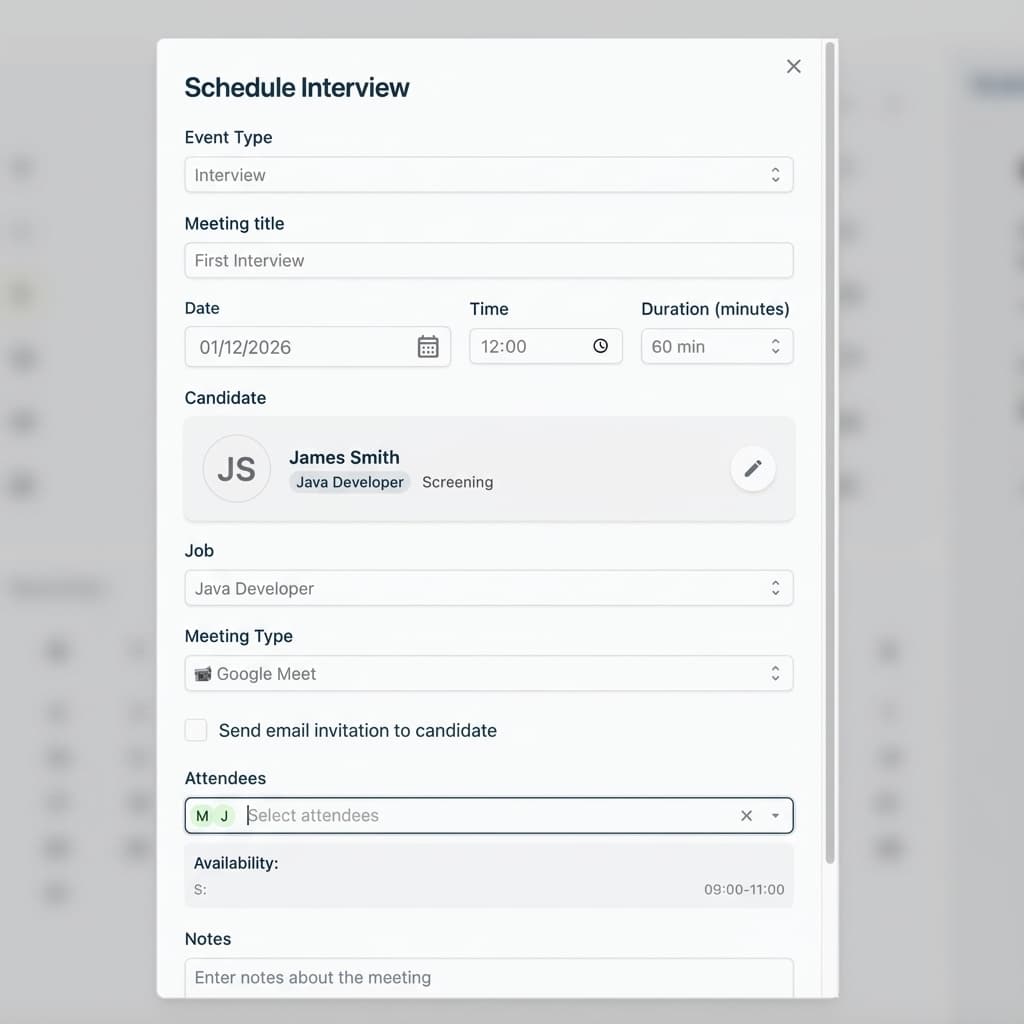
A recruitment SLA is an agreement about who takes the next step and how long it should take. Do not copy another company’s deadlines. Choose targets your team can meet with its current workload, and define exactly when the clock starts and stops.
Without a clear owner, even a short deadline is only an aspiration. Agree on ownership and exceptions before measuring delays.
What to define
For every stage, agree on:
- Starting event: what starts the deadline, such as an interview ending or a profile being sent for a decision.
- Owner: a named person or role responsible for the response.
- Deadline: a number of business hours or days set by the team.
- Clock rules: when the timer starts and what counts as completion.
- Exceptions: when the timer pauses or needs a new agreement, such as waiting for additional information.
- Reminder and escalation: who gets notified as a deadline approaches or passes, and what happens next.
- Review: when the team checks whether the rule is realistic.
Copyable template
Stage or event: [what starts the wait] Decision owner: [person or role] Response target: [number of business hours or days] Clock starts: [event and moment] Clock stops: [response recorded in the agreed place] Exceptions: [when the deadline pauses or changes] Reminder: [who gets a signal, when, and how] Escalation: [what happens if the target is missed] Review date: [date and owner]
Complete the template for the main handoffs between recruiting and hiring managers. For example, after an interview, the team can agree on a business-hours deadline for recording a decision. The actual target depends on calendars, availability, and the role; one timeframe will not fit every process.
How to put the agreement into practice
Start with one active role and the few stages where decisions most often stall. Record an owner and a deadline, then track exceptions for an agreed period. If the team regularly misses a target, find the cause before shortening it: workload, missing information, unclear ownership, or too many handoffs.
Review candidates waiting past the agreed deadline once a week. Revisit the rules every quarter or after a major process change.
An ATS can help the team share a view of the stage, owner, and deadline if those fields are available in the selected plan and configuration. A reminder may help surface a delay, but it does not replace an accountable person or a decision.
Common mistakes
- Setting targets without agreeing on working hours.
- Assigning ownership to the whole team instead of one person.
- Treating time spent waiting for a candidate like an internal delay.
- Shortening a target without addressing the cause.
- Sending alerts that nobody reviews or acts on.
See how GoJobee describes recruitment automations, then check whether their scope matches your team’s agreement.
Frequently asked questions
Can we use 24 or 48 hours as an SLA?
You can use them as a starting point for discussion, not as a universal standard. Agree on a business-hours target and test it in a real process.
Who owns the SLA?
Recruiting can own process consistency while hiring managers own decisions at their stages. Name an owner for every handoff.
How often should we review it?
Review exceptions weekly while the process is active. Change the targets when evidence and team experience show that the current model is not working.
Next step
Turn this article into a cleaner, faster hiring workflow
If you want to put these ideas into practice inside an ATS, start with a free account, review pricing, and explore the key GoJobee features.