ATS Metrics: Which Recruitment KPIs Should You Track? | GoJobee
Most teams do not fail because they lack data. They fail because they track too many metrics and act on too few.
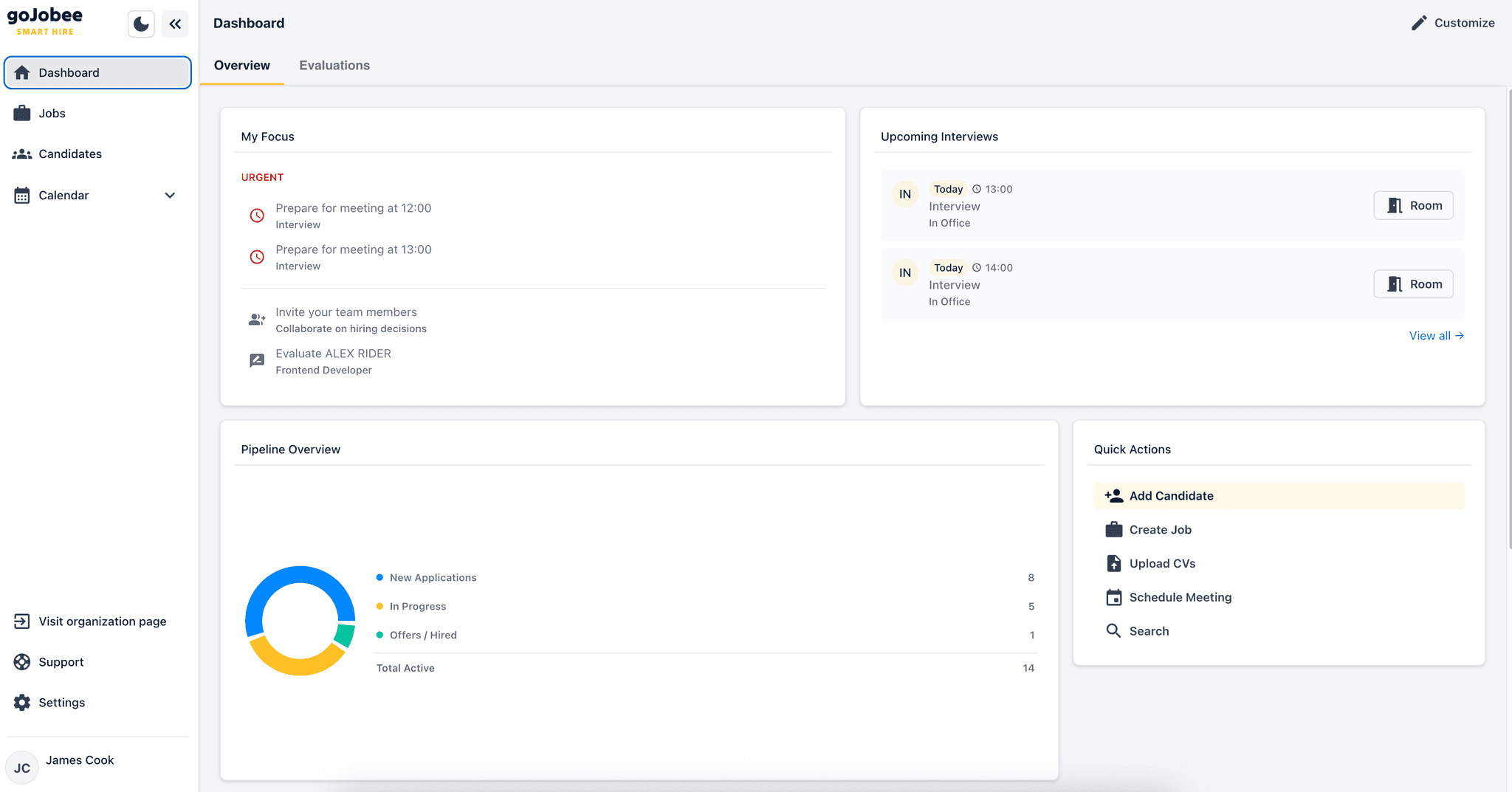
A useful ATS dashboard should help you answer one question every week: where is process quality dropping, and what should we fix first?
KPI hierarchy: speed, quality, throughput
Use three layers:
- speed metrics (how fast decisions move),
- quality metrics (how good outcomes are),
- throughput metrics (how much process can handle).
This keeps reporting tied to decisions, not vanity charts.
Core weekly KPI set (start here)
- Application-to-first-action time.
- Interview-to-feedback time.
- Stage conversion rate.
- Time-to-hire.
- Offer acceptance rate.
If your team reviews these consistently, you already control most bottlenecks.
Extended monthly KPI set
Add monthly:
- source-to-hire,
- interview-to-offer ratio,
- candidate dropout rate,
- recruiter workload per open role,
- quality-of-hire proxy after onboarding period.
How to run a practical weekly KPI review
- Review trend deltas, not single-point values.
- Identify one bottleneck stage.
- Assign one owner and one corrective action.
- Recheck effect in next weekly cycle.
This rhythm keeps optimization lightweight and measurable.
Common KPI mistakes
Tracking everything from day one
This creates dashboard noise and no action.
Ignoring ownership
A metric without owner rarely improves.
Optimizing speed only
If quality metrics are ignored, decision quality drops.
Reviewing monthly only
By the time monthly review happens, bottlenecks have already compounded.
Where ATS dashboard helps most
You get immediate value when your team needs:
- faster hiring reviews,
- clearer accountability between recruiters and managers,
- better visibility into stage-level delays.
See product context: recruitment analytics.
FAQ
Frequently asked questions
How many KPIs should we track first?
Usually 4-6 is enough for weekly execution.
Which KPI is most critical at early stage?
Interview-to-feedback time is often the fastest lever.
Should recruiters and managers share one KPI view?
Yes. Shared visibility improves decision speed and accountability.
How often should KPI targets be updated?
At least once per quarter or after major process changes.
What is the best next step after KPI baseline?
Run one improvement experiment per week and measure impact.
Next step
If you want a KPI model you can execute now, combine this dashboard with the ATS implementation checklist and launch one weekly review ritual.
Next step
Turn this article into a cleaner, faster hiring workflow
If you want to put these ideas into practice inside an ATS, start with a free account, review pricing, and explore the key GoJobee features.