Why interview scheduling takes so much time
Most of the time is lost not in the booking itself, but in comparing calendars, handling changes, and keeping meeting details aligned.
Connect team calendars, book from real availability, and send confirmed invites with reminders. GoJobee shortens the path from “we should interview this candidate” to a scheduled meeting.
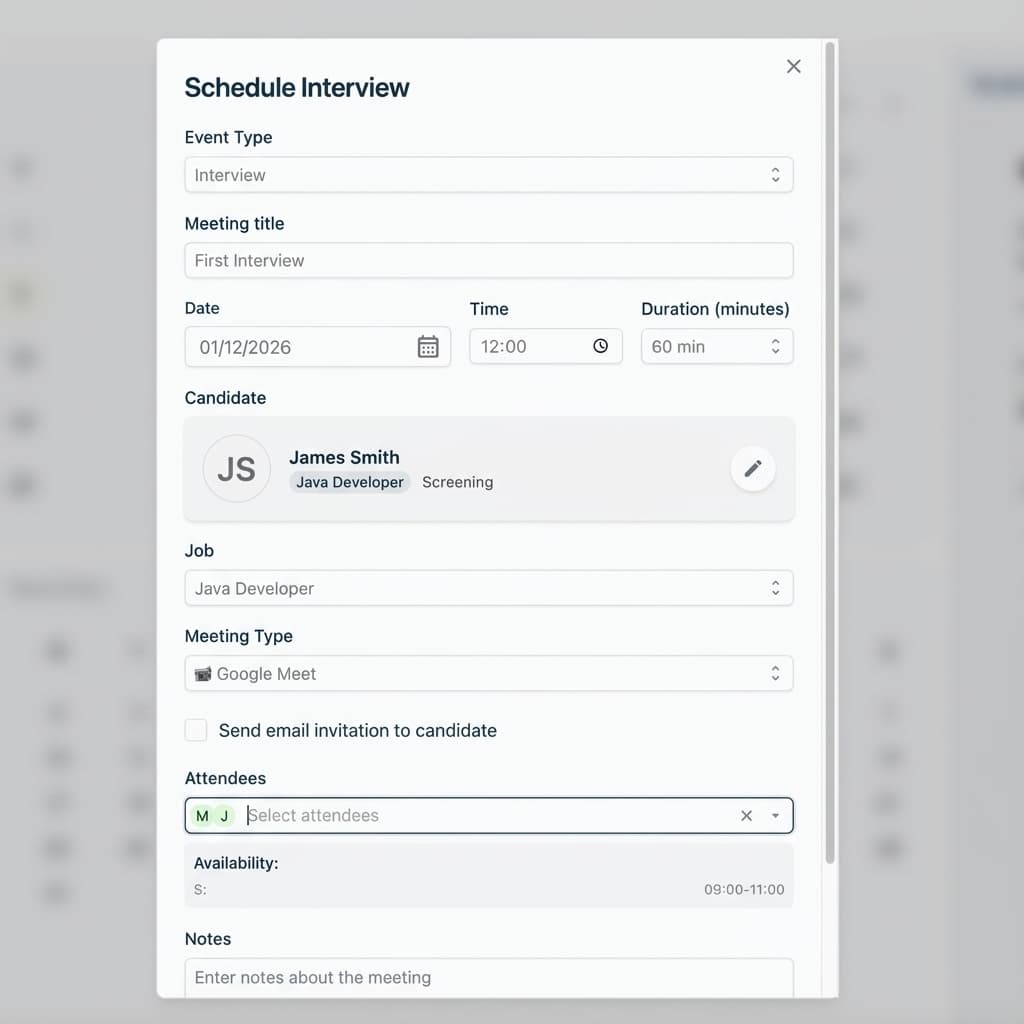
Most of the time is lost not in the booking itself, but in comparing calendars, handling changes, and keeping meeting details aligned.
The fastest gain comes from shared availability and automated invites. That removes the need to stitch one interview slot together from several tools.
Candidates should receive a clear schedule, a ready meeting link, and a reminder. Less coordination chaos means a stronger experience before the interview even starts.
Interview scheduling usually slows down because availability lives in separate places. Calendar sync brings recruiter and interviewer availability into one flow so the team can stop comparing slots manually and move candidates faster.
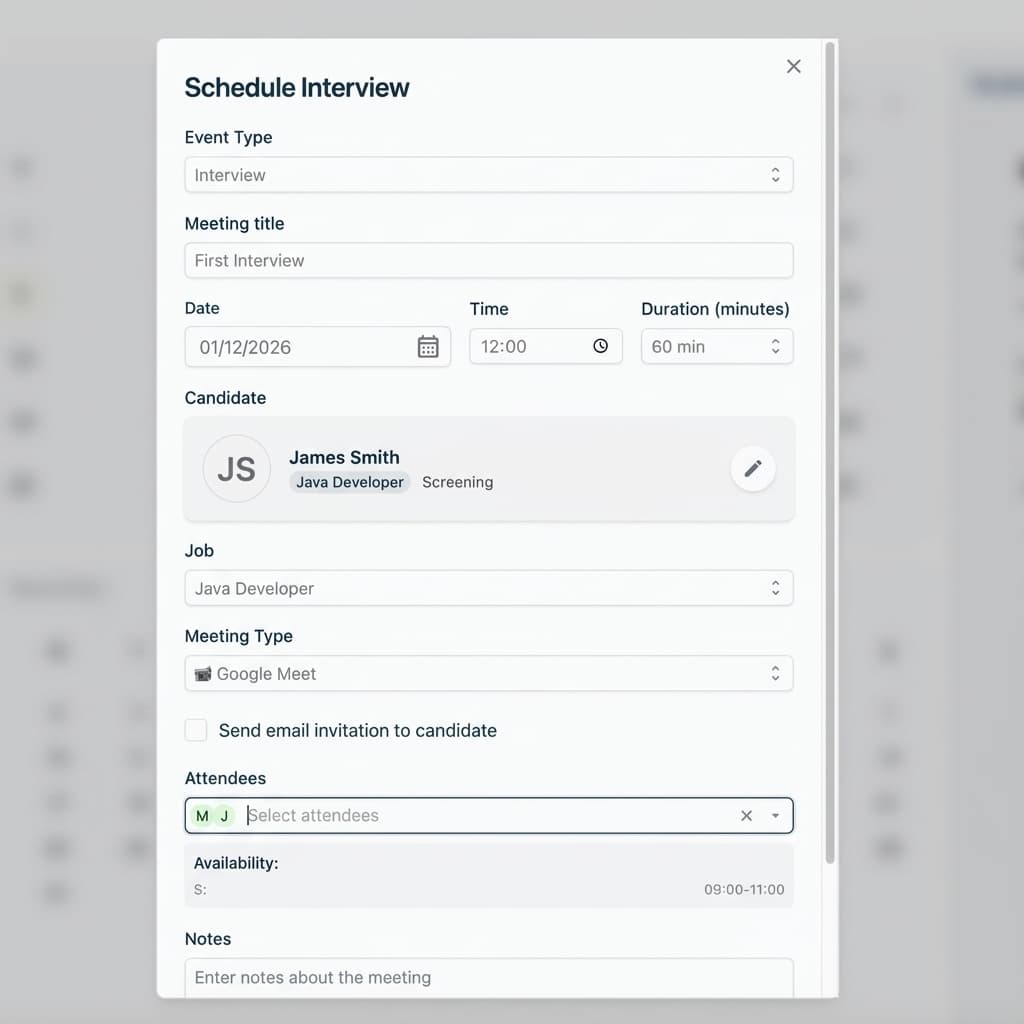
The operational cost of scheduling is not only time. It is also dropped context, double-bookings, and last-minute changes. A shared ATS calendar helps the team book from real availability and keep the booking flow easier to trust.
Calendar integration becomes more valuable when invites, links, and reminders are part of the same workflow. That means less manual admin for the team and fewer coordination gaps for the candidate.
If scheduling is your bottleneck, the next step is usually the booking use case, integrations, and rollout pricing.
Move to the workflow page that connects scheduling, SLA, and fewer calendar conflicts.
See how scheduling works together with Teams, Meet, and the rest of the stack.
Review rollout options if you want scheduling live for active hiring now.
Interview scheduling works best when recruiter, hiring manager, and feedback expectations are aligned. Calendar sync becomes stronger when paired with clear response rules and operating SLA.
The strongest signals are fewer scheduling conflicts, shorter time to confirmed interview, and fewer manual follow-up loops.
The biggest gain is removing manual coordination. Teams stop comparing calendars in separate tools, reduce follow-up emails, and book interviews faster with less friction.
Not always, but value increases when recruiter and interviewer calendars are both connected. That gives you cleaner availability, fewer conflicts, and less manual back-and-forth.
Yes. Calendar integration should make scheduling easier, not rigid. Teams still control time windows, participants, and meeting type while the ATS handles the repetitive coordination work.
Connect calendars, set a cleaner interview workflow, and shorten the path from decision to confirmed meeting.