AI in ATS

AI recruiting assistant for faster screening, candidate summaries, and interview prep

Give recruiters and hiring managers practical AI help inside the ATS. Score candidate fit, generate handoff-ready summaries, prepare better interviews, and draft job ads faster without turning the process into black-box automation.

Candidate scoring software that helps recruiters prioritize faster
AI candidate summaries that tighten recruiter to hiring manager handoffs
AI interview preparation and job drafting for day-to-day ATS work

Where AI creates the biggest operational gain

Teams usually feel the first impact in tasks that repeat across every role: early prioritization, handoff context, interview preparation, and first-draft job content. The win is not AI for its own sake. The win is removing slow manual work from the ATS workflow.
What good implementation looks like

Start with one role, keep humans accountable for decisions, and review performance weekly. When AI supports judgment instead of replacing it, teams gain speed without lowering confidence.

What this page is built to answer

Which AI workflow should you start with, how candidate scoring fits in ATS operations, and how to measure whether AI is actually helping the team move candidates faster.

Match score and prioritization that help recruiters start faster

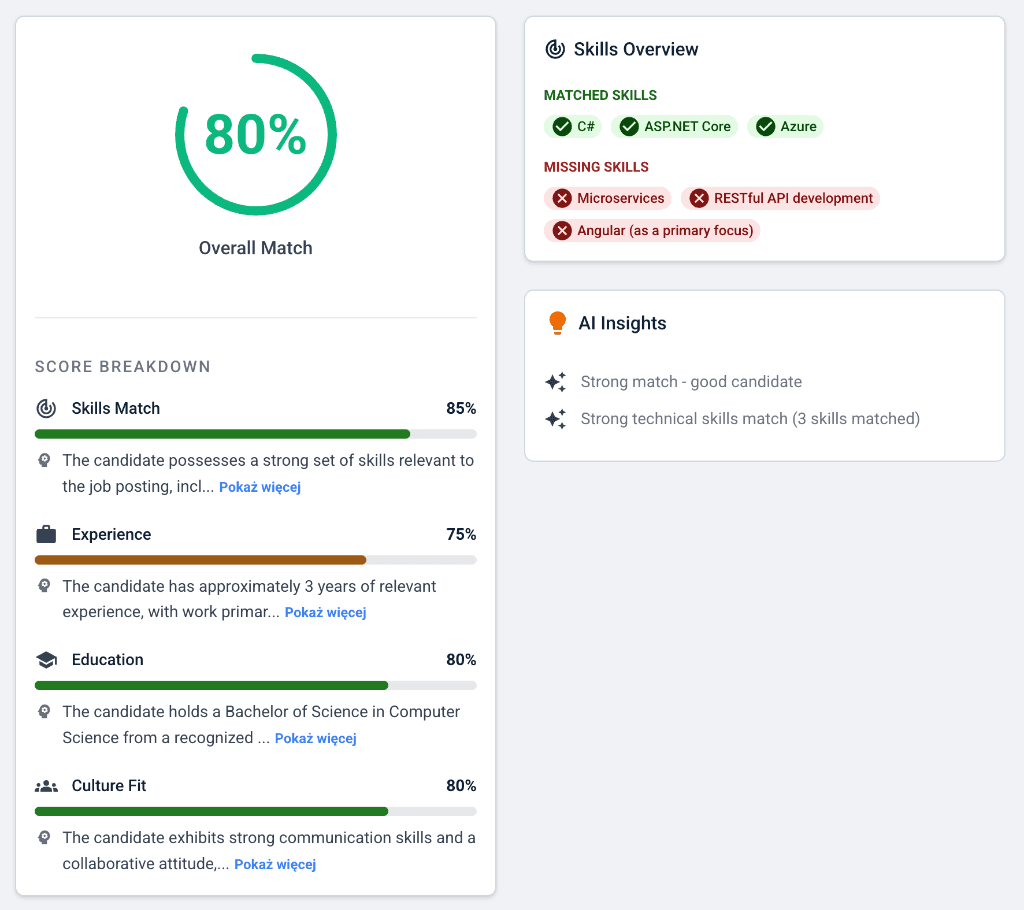
A useful AI recruiting assistant should shorten the first triage pass. Match score gives recruiters a faster way to separate clear fits, clear misses, and candidates who need human review. That does not replace recruiter judgment. It reduces time wasted on repetitive sorting and gives the team a cleaner starting point every morning.

  • Prioritize likely-fit candidates without reading every profile from zero
  • Reduce manual sorting during high-volume application spikes
  • Keep the recruiter focused on review quality instead of queue chaos
GoJobee AI recruiting assistant match score view

AI candidate summaries that improve handoffs between recruiter and hiring manager

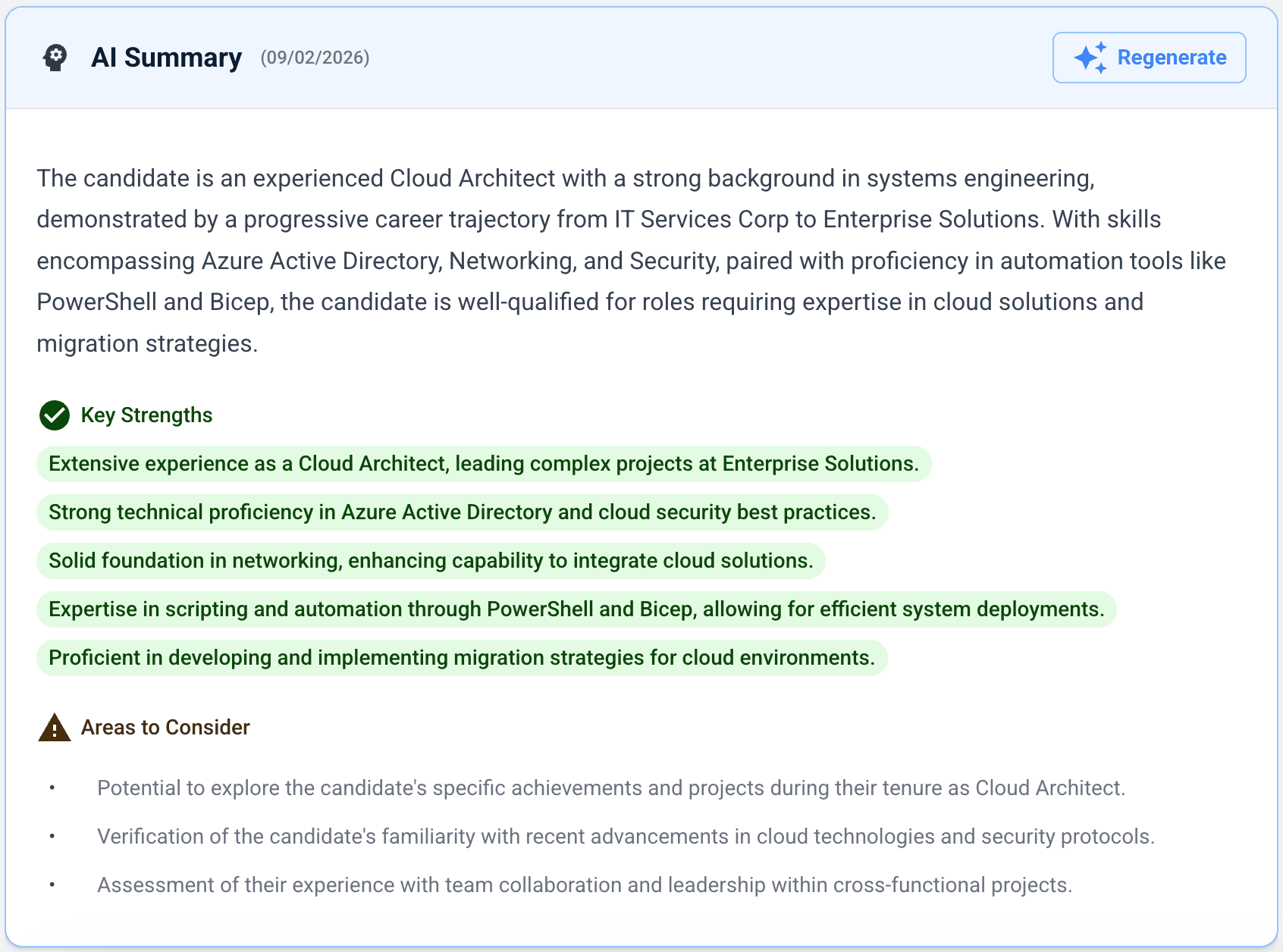
Context often gets lost between stages. Recruiters know the profile in detail, while hiring managers arrive with partial notes and too little time. AI candidate summaries tighten that handoff by pulling the role-relevant signal into one readable view. That makes review meetings shorter and hiring conversations more consistent.

  • Give hiring managers a compact summary before they open the full profile
  • Reduce repeated explanation work from recruiter to stakeholder
  • Keep candidate history easier to review during later-stage decisions
GoJobee AI candidate summary view

AI interview preparation built for operational ATS work

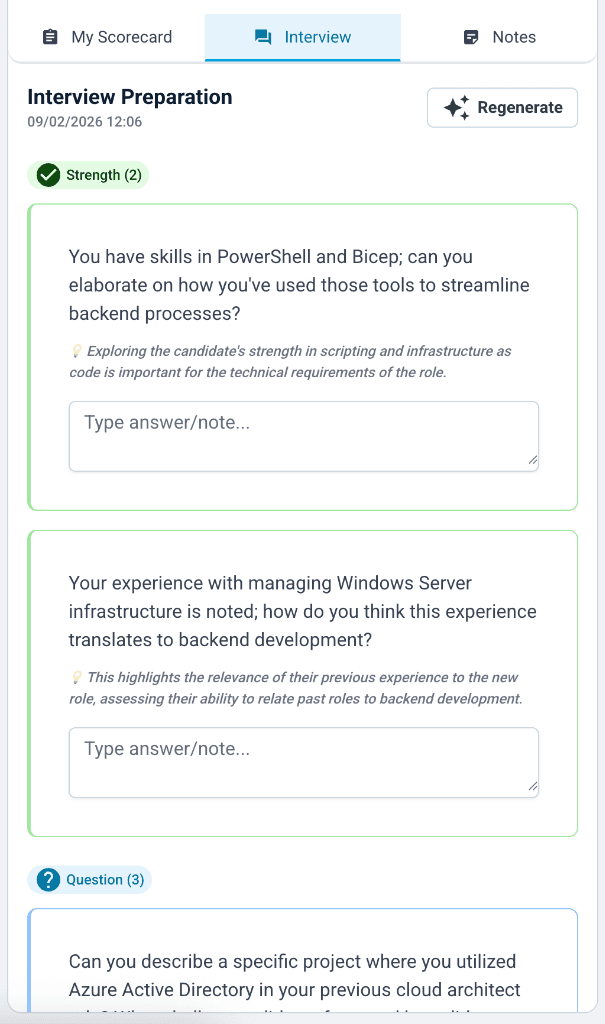
Interview preparation should help teams ask better questions, not generate noise. AI interview prep helps surface the experience areas worth validating, suggests role-specific prompts, and gives the next interviewer a stronger starting frame. That is especially useful when multiple stakeholders join the process and need shared context quickly.

  • Prepare role-specific questions instead of relying on generic templates
  • Highlight candidate claims worth verifying before the interview starts
  • Support cleaner coordination with faster interview scheduling and clearer preparation

Pair this with the faster interview scheduling use case when coordination delays are hitting candidate experience.

GoJobee AI interview preparation view

Job description drafting that gets a role live faster

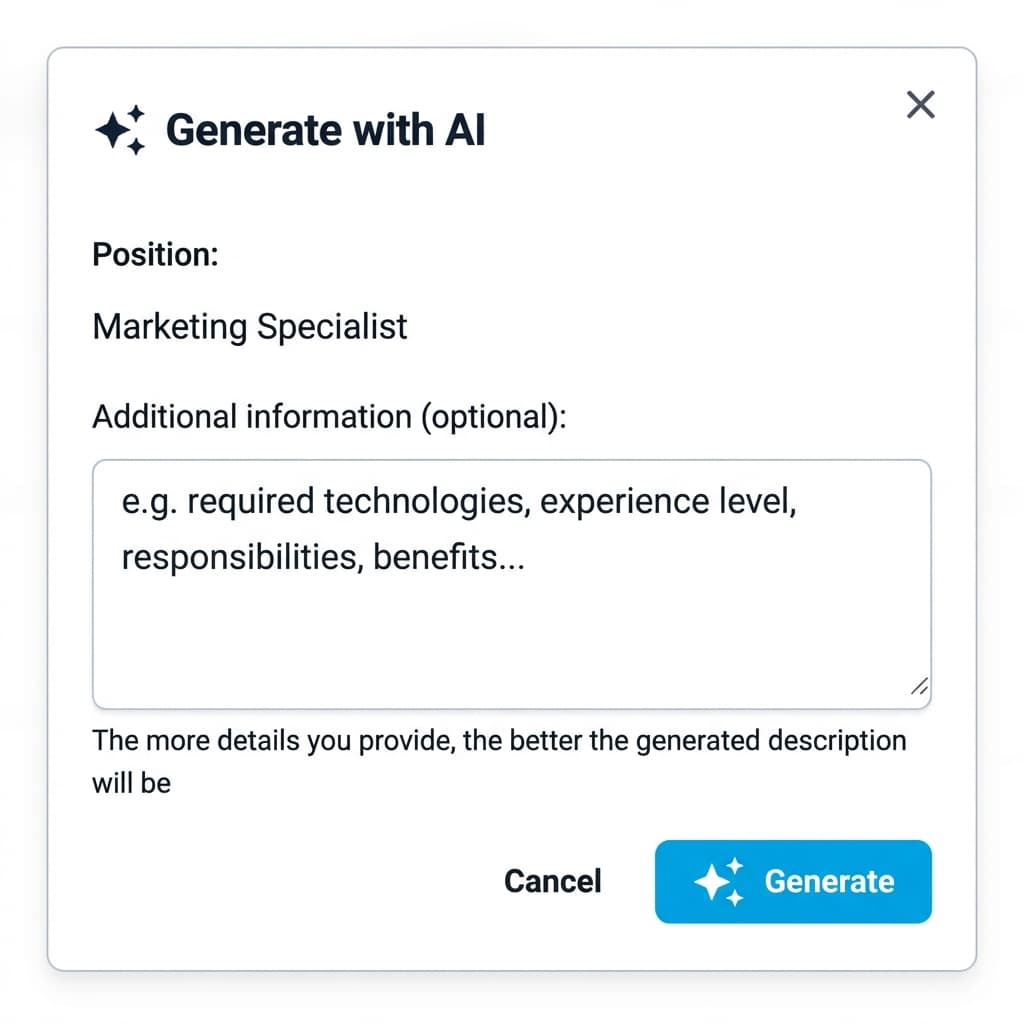
Many pipelines lose days before sourcing begins because the role brief never becomes a strong first draft. AI job description drafting helps teams move from blank page to usable copy faster. Recruiters and hiring managers still own the final message, but they stop wasting time formatting the obvious parts from scratch.

  • Create a first draft faster when a new role needs to go live quickly
  • Give hiring managers something concrete to review instead of a blank document
  • Cut repetitive drafting work while keeping the final approval human-led
GoJobee AI job description drafting view

Implementation guardrails and KPI review

AI in ATS works best when teams set simple operational rules. Keep one human owner for every decision, define what counts as a complete review, and check whether faster output still produces trustworthy decisions. That is where process discipline matters more than hype.

AI recruiting assistant FAQ

Is an AI recruiting assistant only useful for large hiring teams?

No. Smaller teams often feel the gain faster because screening, interview prep, and handoffs eat a bigger share of total capacity. AI is most useful where a few repeated tasks slow the whole pipeline down.

Does an AI recruiting assistant make final hiring decisions?

It should not. GoJobee AI supports prioritization, summaries, and preparation work, while final hiring decisions stay with recruiters and hiring managers.

Which AI workflow is the best starting point?

For most teams, candidate summaries and match score are the best starting point. They reduce manual review time quickly and improve handoffs without changing the decision model.

How do you know whether AI is improving the process?

Track time to first recruiter action, screening time per candidate, interview-to-feedback speed, and stage conversion quality. If speed improves and trust in decisions stays high, the setup is working.

Ready to reduce manual screening work without losing hiring quality?

Run AI recruiting assistant workflows on one live role, review the result against your ATS KPIs, and expand only where the team sees real operational gain.