What Is ATS? Complete Applicant Tracking System Guide (2026) | GoJobee
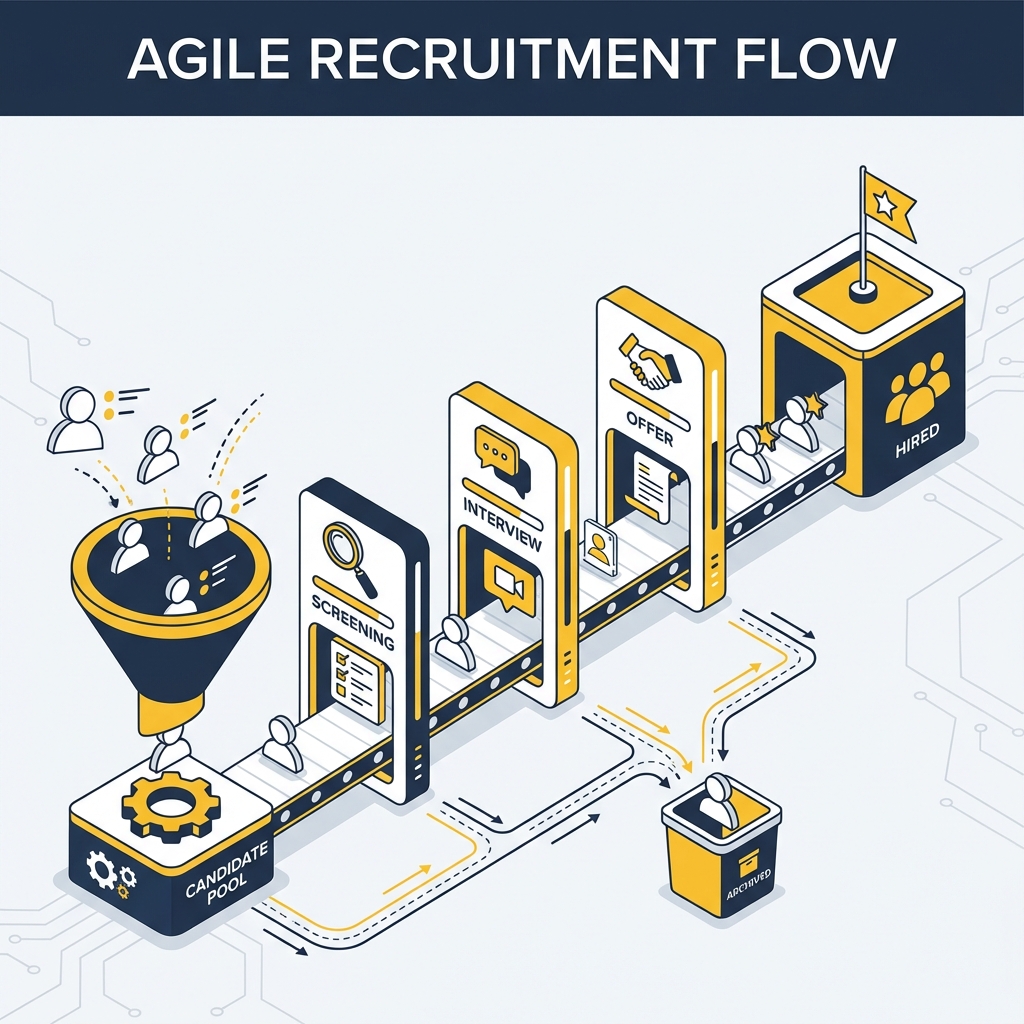
What is ATS and why modern teams rely on it
ATS stands for Applicant Tracking System. It is a platform that helps teams manage recruitment from application intake to final decision in one structured workflow.
In practice, ATS gives your team one shared process view: candidate status, communication, interview steps, and decision ownership.
If you want to see this in action, start with GoJobee free ATS.
ATS in one sentence
An ATS makes hiring operations faster and more consistent by replacing scattered manual coordination with a clear process system.
Hiring without ATS vs hiring with ATS
Without ATS, teams often run hiring through:
spreadsheets,
email threads,
chat reminders,
disconnected calendars.
With ATS, teams get:
defined stages,
clear ownership,
shared visibility,
measurable process performance.
Core ATS features and why they matter
Pipeline stages
Visual stage flow helps identify where candidates get stuck and where decisions are delayed.
Scheduling and calendar sync
Interview coordination becomes faster and less error-prone.
Communication templates
Recruiters and managers maintain consistency while reducing repetitive manual effort.
Automation rules
Reminders and transitions keep process momentum without constant follow-up.
AI support
AI assists with faster screening and better interview preparation.
Feature references:
Who should implement ATS first
ATS is especially valuable for:
startups building repeatable hiring for the first time,
HR teams running multiple active roles,
agencies coordinating many stakeholders.
See one practical segment example: ATS for startups.
When to implement ATS
The right time is usually when process friction starts causing delays, not when your team is already overloaded.
Use this trigger list:
candidate status is often unclear,
feedback loops are slow,
interview coordination consumes too much time,
team decisions are hard to track.
Implementation roadmap: ATS implementation checklist in 30 days.
What ATS will not fix by itself
ATS is not a substitute for process ownership. Teams still need:
decision roles,
feedback standards,
KPI review cadence.
The best results come from combining tool setup with lightweight operating rules.
Practical KPI baseline for first month
Track:
application-to-first-action time,
interview-to-feedback time,
stage conversion rate,
time-to-hire.
These metrics show whether ATS is improving outcomes, not just adding software.
FAQ
Is ATS only for large enterprises?
No. Small and mid-size teams often benefit the most from process clarity.
Is implementation complicated?
Not if you start with a lean workflow and expand after pilot validation.
Can ATS replace hiring decisions?
No. ATS supports process and information quality; decisions stay with your team.
How fast can we see impact?
Many teams see operational improvements within the first hiring cycle.
Is there a low-risk way to start?
Yes. Launch one pilot role and validate process quality before scaling.
Next step
If you want to move from theory to real process impact, start with GoJobee free ATS and run one pilot role end-to-end.
Next step
Turn this article into a cleaner, faster hiring workflow
If you want to put these ideas into practice inside an ATS, start with a free account, review pricing, and explore the key GoJobee features.